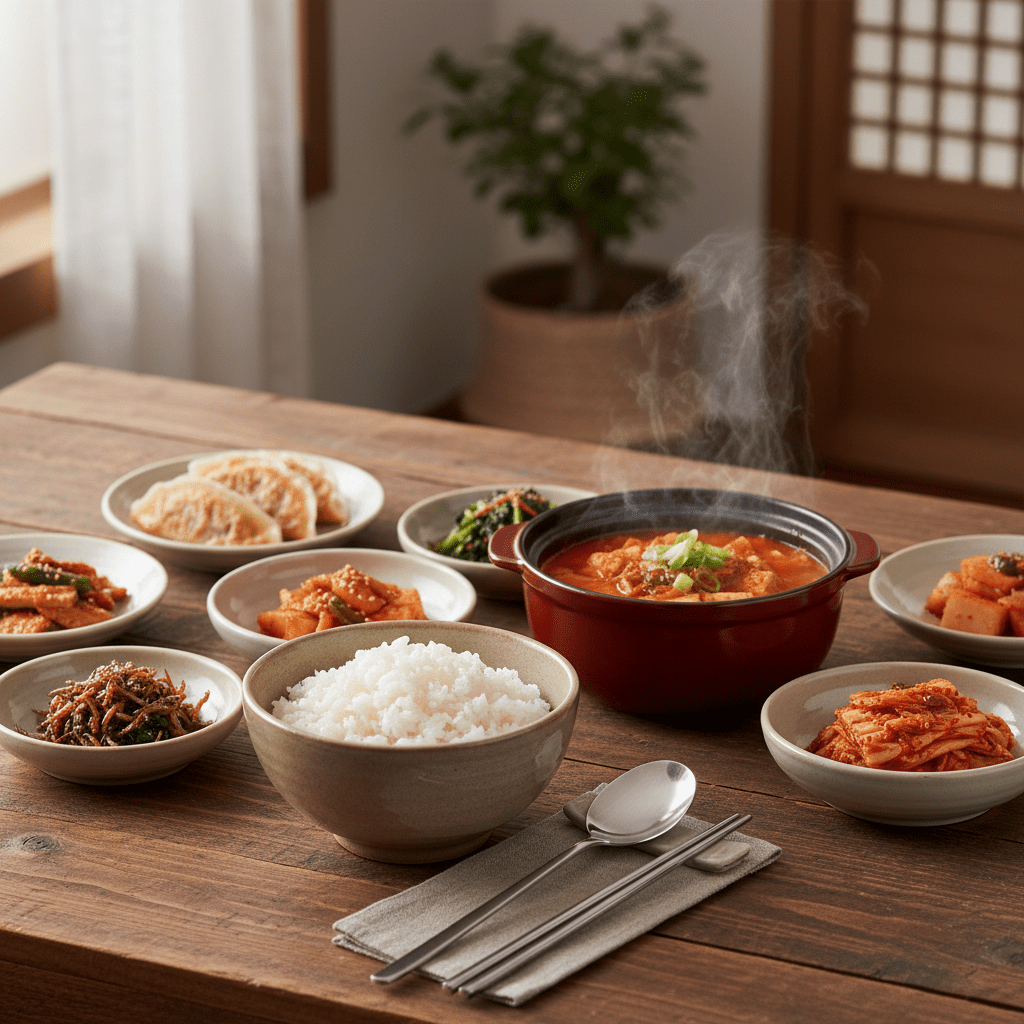
Korean eating habits are often summarized through one simple image: a bowl of rice and a plate of kimchi on the table. That image is familiar for a reason. For generations, rice has served as the core of the meal, while kimchi has functioned as both a side dish and a daily marker of Korean identity. But if international readers want to understand why this pairing matters, they need to look at both culture and nutrition rather than assuming it is simply a tradition repeated out of habit.
Why rice and kimchi became the center of the Korean table
Rice has long been treated in Korea as the foundation of a proper meal, not just one carbohydrate among many. Kimchi, meanwhile, developed as a practical and highly adaptable fermented side dish that could preserve vegetables and add intensity to otherwise simple meals. Together, rice and kimchi created a reliable everyday structure: blandness and sharpness, stability and stimulation, satiety and flavor. That balance is one reason the pairing became so deeply embedded in daily life.
In Korea, rice and kimchi are not just foods that appear together. They help define what a complete meal feels like.
Why this eating pattern is often seen as healthy
Many discussions of Korean food point to the broader dietary pattern around rice and kimchi, not just the two foods alone. Traditional Korean meals often include vegetables, soups, legumes, fermented foods, and relatively moderate portions of animal protein compared with heavier meat-centered diets. Research and review articles on Korean fermented foods also frequently note kimchi’s connection to beneficial bacteria, vegetable intake, and various bioactive ingredients from garlic, chili, cabbage, radish, and other components.
- Rice: provides energy and acts as the base that balances salty or strongly seasoned side dishes
- Kimchi: offers fermented vegetables and is often discussed in connection with gut-related and microbial benefits
- Meal structure: the wider Korean table often includes multiple plant-based side dishes, which can support dietary variety
Kimchi’s benefits are real, but so are the limits
This is where balance matters. Kimchi is often praised for fermentation-related benefits and for containing vegetables and seasonings associated with antioxidant or immune-supporting properties. At the same time, modern health discussions in Korea also regularly point out concerns about sodium, especially when kimchi is eaten in large quantities alongside other salty dishes. In other words, kimchi is not a miracle food and not a villain either. Its effects depend on quantity, the rest of the meal, and the overall dietary pattern.
That nuance is important because international coverage sometimes swings between two extremes: romanticizing kimchi as a perfect superfood, or criticizing it only through the lens of salt. The more accurate view is that kimchi can be part of a nutritionally interesting diet, but it makes the most sense when understood within the whole Korean meal system.
How Korean eating habits are changing
Modern Korea does not eat exactly like older generations did. Bread, noodles, delivery food, meat-heavy dining, convenience meals, and global café culture all play a larger role now. Even so, rice and kimchi remain psychologically central. Many Koreans still describe a meal without rice as incomplete, and kimchi continues to act as the default side dish that makes a meal feel recognizably Korean.
This means the continued importance of rice and kimchi is not only nutritional. It is emotional. These foods signal routine, familiarity, and home. That cultural effect helps explain why they remain powerful even as overall eating habits diversify.
What international readers should take away
If you want to understand Korean food culture, do not think of rice and kimchi as isolated health products. Think of them as the center of a larger meal pattern that historically combined grains, vegetables, fermentation, and side-dish variety. The health effects of that pattern can be meaningful, but they are strongest when discussed with proper context rather than exaggeration.
Conclusion
In the end, rice and kimchi still define Korean eating habits because they work on several levels at once. They are practical, familiar, culturally symbolic, and nutritionally significant within the broader Korean meal structure. Their effects are not only about vitamins, probiotics, or calories. They are also about how a society organizes everyday eating—and how that organization continues to shape Korean life today.

 Trend Kr
댓글 남기기