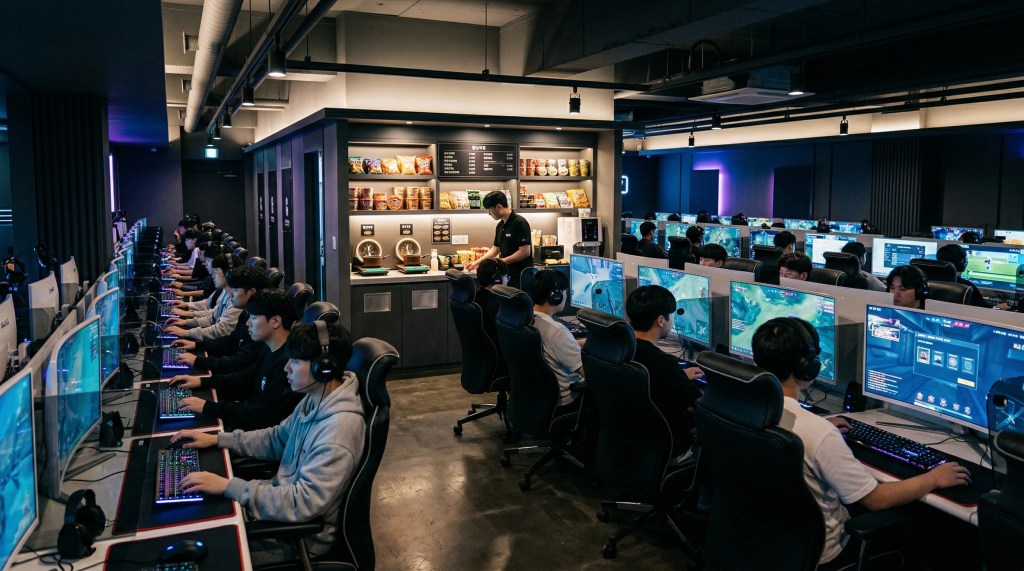
Korean PC bangs are no longer at the absolute center of youth culture in the way they once were, but they still matter. For international readers, a PC bang is not just an internet café. It is a specifically Korean gaming space: rows of high-performance computers, low hourly rates, fast connections, and a menu that can include instant noodles, snacks, and drinks delivered directly to your seat.
This topic matters now because PC bangs show both the rise and the aging of modern Korean digital culture. They were central to the expansion of online gaming and esports, especially during the era when games like StarCraft helped define Korean gaming identity. Today, the industry is often described as being past its peak, yet PC bangs remain widespread enough to stay culturally visible.
How PC bangs became so important
The rise of the PC bang was closely tied to Korea’s early online gaming boom. Fast internet infrastructure, dense cities, and highly social gaming habits created ideal conditions for shared computer spaces. PC bangs became places where people did not just play games, but played them together, side by side, in real time.
That social dimension mattered. In Korea, gaming culture developed not only through private home play but also through public participation. The research summary points directly to the role of StarCraft in changing PC bang culture, and that is one of the clearest reference points for international readers. PC bangs helped turn gaming into something communal, visible, and competitive.
Korean PC bangs were important not just because people played games there, but because they made gaming feel like a shared public culture.
Why esports and PC bangs were linked
It is difficult to explain Korean esports history without mentioning PC bangs. These spaces helped normalize competitive gaming as an everyday habit long before esports became globally mainstream. For many young players, the PC bang was where new titles spread quickly, multiplayer competition felt immediate, and gaming culture became embedded in ordinary social life.
- Easy access: players did not need expensive home hardware to join major games
- Social play: friends could gather and compete in the same room
- Game diffusion: popular online titles spread rapidly through shared use
- Esports atmosphere: competitive play felt local and visible, not abstract
From boom to decline
That said, the classic PC bang era has clearly weakened. The research summary includes reporting that describes PC bangs as moving from a symbol of youth culture toward a declining industry. That shift makes sense. Home devices improved, mobile gaming expanded, and the exclusivity once held by PC bangs became harder to maintain.
So the story of the PC bang is not simple collapse, but transition. It no longer dominates the cultural imagination in the old way, yet it has not disappeared. In Korea, that often means a space has moved from being central to being normalized.
What a Korean PC bang is like today
For visitors, the modern PC bang is still a distinctive environment. Many operate 24 hours a day, even if youth access is regulated by time restrictions. They are now typically non-smoking, which marks an important change from the older image many Koreans still remember. The atmosphere is often cleaner, more standardized, and more service-oriented than outsiders expect.
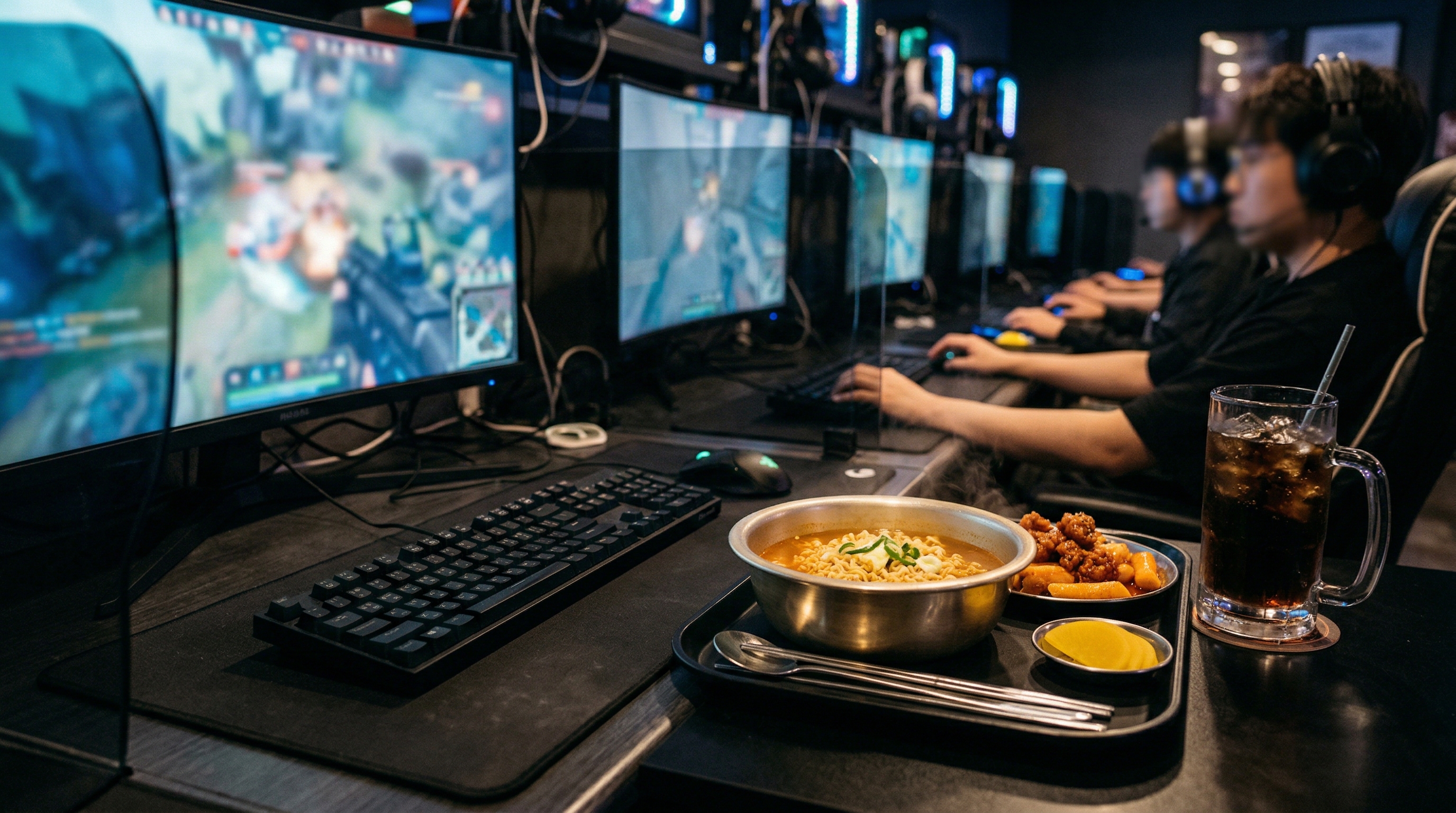
Food is also part of the experience. One reason PC bangs remain socially sticky is that they are not just rooms full of computers. They often function as low-cost leisure spaces where people can order ramyeon, snacks, and drinks without leaving their seat. That combination of gaming, comfort, and cheap food is a major reason they continue to attract regular users.
Why teenagers still care about them
Even with decline, PC bangs still matter as youth space. In Korea, leisure space for teenagers can be limited, expensive, or highly supervised. The PC bang offers something different: a semi-public environment where young people can gather, play, eat, and spend time without needing a large budget.
The research summary also refers to legal restrictions on youth access during certain late-night and early-morning hours. That detail is useful because it shows how PC bangs are not treated as neutral commercial sites alone. They are also recognized as places strongly associated with teen culture.
Why the culture still survives
PC bangs endure because they still solve several problems at once. They provide good gaming hardware, fast internet, social atmosphere, and inexpensive food in one place. Even if they are no longer the engine of Korean gaming modernity, they remain a practical leisure format.
For international readers, the key point is this: Korean PC bang culture is a story of both historic success and cultural afterlife. It helped shape online gaming and esports in Korea, and although the industry has thinned out, the format still survives because it remains useful, familiar, and socially convenient.
Conclusion
Korean PC bangs matter because they capture the rise, normalization, and partial decline of Korea’s gaming culture in one place. They were crucial to the spread of online games and esports, especially during the StarCraft era. Today they are less dominant, but still widely recognized as 24-hour gaming spaces where people can play, eat, and spend time together. That is why the PC bang remains one of the most revealing spaces in modern Korean leisure culture.
Photo by Jeffry Surianto on Pexels

 Trend Kr
Leave a comment