
The language South Korea uses for generations often sounds playful at first, but it rarely stays light for long. Terms like MZ generation and Young Forty (yeong-poti, 영포티) circulate as internet shorthand, but they carry much more than age-based identity. They condense resentment, aspiration, insecurity, and status anxiety into labels that are easy to repeat and hard to escape.
This matters now because the meme economy around generations in Korea is not just about taste, fashion, or who seems out of touch. It reflects a deeper social mood: younger people facing employment pressure, housing difficulty, and shrinking certainty often turn generational language into a way of naming unfairness. In that sense, the joke is real, but the pressure behind the joke is more real.
The MZ label was always broader than it looked
For international readers, MZ generation is a specifically Korean label that bundles together Millennials and Gen Z into one social category. That alone is revealing. Instead of treating these as separate generations with different experiences, Korea often collapsed them into a single cultural bloc associated with new consumption habits, digital communication, trend sensitivity, and different workplace expectations.
But broad labels create broad distortions. The phrase can make a diverse group look more coherent than it really is. It can also turn complex structural problems into personality traits. If younger people prefer text over phone calls, move toward the Seoul metropolitan area, or communicate through memes, those may be read as MZ traits. Yet many of these behaviors are also adaptive responses to a high-pressure society.
In South Korea, generational labels often function less as neutral description than as compressed social argument.
How Young Forty became a meme of conflict
Young Forty originally sounded almost flattering: a way to describe people in their forties who stayed style-conscious, culturally current, and youthful in attitude. But once it moved through online communities, the tone shifted. The term increasingly became a mocking label for people seen as trying too hard to appear young while still reproducing older habits of hierarchy, self-importance, or condescension.
That shift matters because it shows how fast a positive lifestyle label can become a weapon in Korea’s online generational conflict. Once a word becomes meme material, it no longer just describes. It sorts, ridicules, and disciplines. The target is no longer simply age; it is a whole style of social behavior that younger people find exhausting or insincere.

The meme is not really about age alone
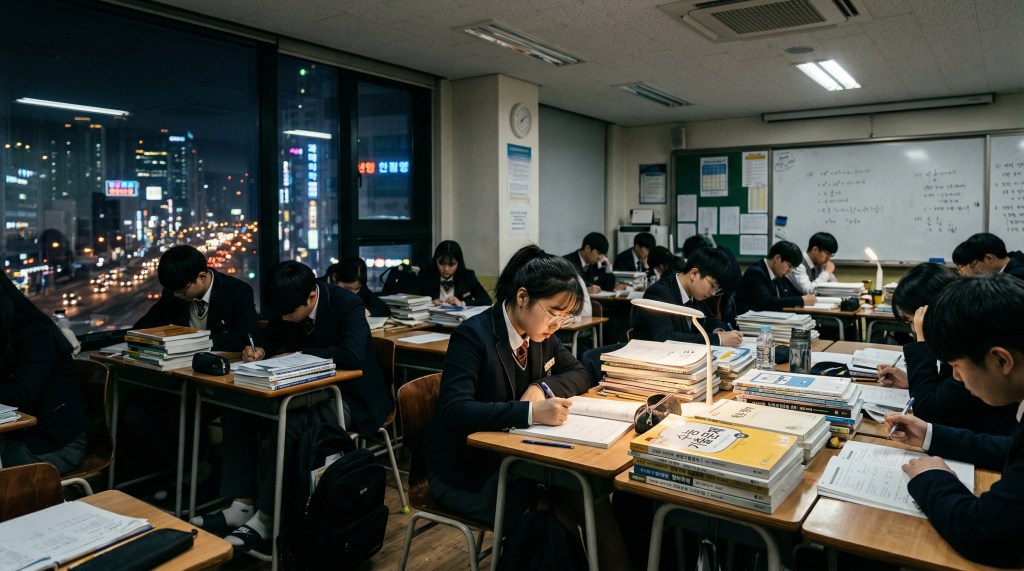
It would be a mistake to read the Young Forty meme as just younger people making fun of older people’s clothes, speech, or social media habits. The stronger reading is structural. The meme gains force because many younger Koreans feel that they are being asked to compete in a society where the rewards are delayed, the entry barriers are high, and the older generations still hold disproportionate economic and cultural power.
- Youth unemployment and unstable work make status competition harsher
- Housing pressure makes adulthood feel financially postponed
- Class tension turns lifestyle display into something politically charged
- Generational fatigue makes younger people suspicious of advice that sounds moralizing but ignores material hardship
Seen this way, the meme works as a small act of reversal. Younger people may have less wealth and less institutional power, but they can still control the language of ridicule online. That does not solve inequality. It simply changes where some of the frustration gets expressed.
Why the conflict feels so sharp in Korea
South Korea gives generational conflict unusually fertile ground because life chances are so visibly tied to competition. Work, housing, education, and urban concentration all push people into comparison. That is one reason generational discourse becomes moralized very quickly. Older people can frame the young as too sensitive, unserious, or over-identified with trends. Younger people can frame older cohorts as hypocritical gatekeepers who benefited from a different economy and now speak as if nothing fundamental has changed.
What the meme reveals about class as much as generation
One reason the Young Forty meme resonates is that it is not only about age. It is also about class performance. In Korea’s urban culture, image is rarely just image. The way people dress, speak, consume, and present themselves can signal who feels entitled to occupy space with confidence. When younger people under financial pressure see middle-aged confidence packaged as effortless cool, the reaction is not always admiration. Sometimes it is irritation mixed with resentment.
That is why this meme should be read not as a shallow online joke, but as a clue. It points to a society where generational identity is carrying too much of the emotional weight created by economic stress, housing insecurity, and blocked mobility.
Conclusion
The MZ label and the Young Forty meme matter because they reveal how South Korea compresses structural frustration into generational language. On the surface, the meme looks like a joke about age and style. Underneath, it reflects class anxiety, youth hardship, and the feeling that opportunity is unevenly distributed. That is why the meme keeps spreading. It is not just funny to some people. It feels like one of the few available ways to speak anger in a society still obsessed with status and age.
Photo by Theodore Nguyen on Pexels


 Trend Kr
Leave a comment