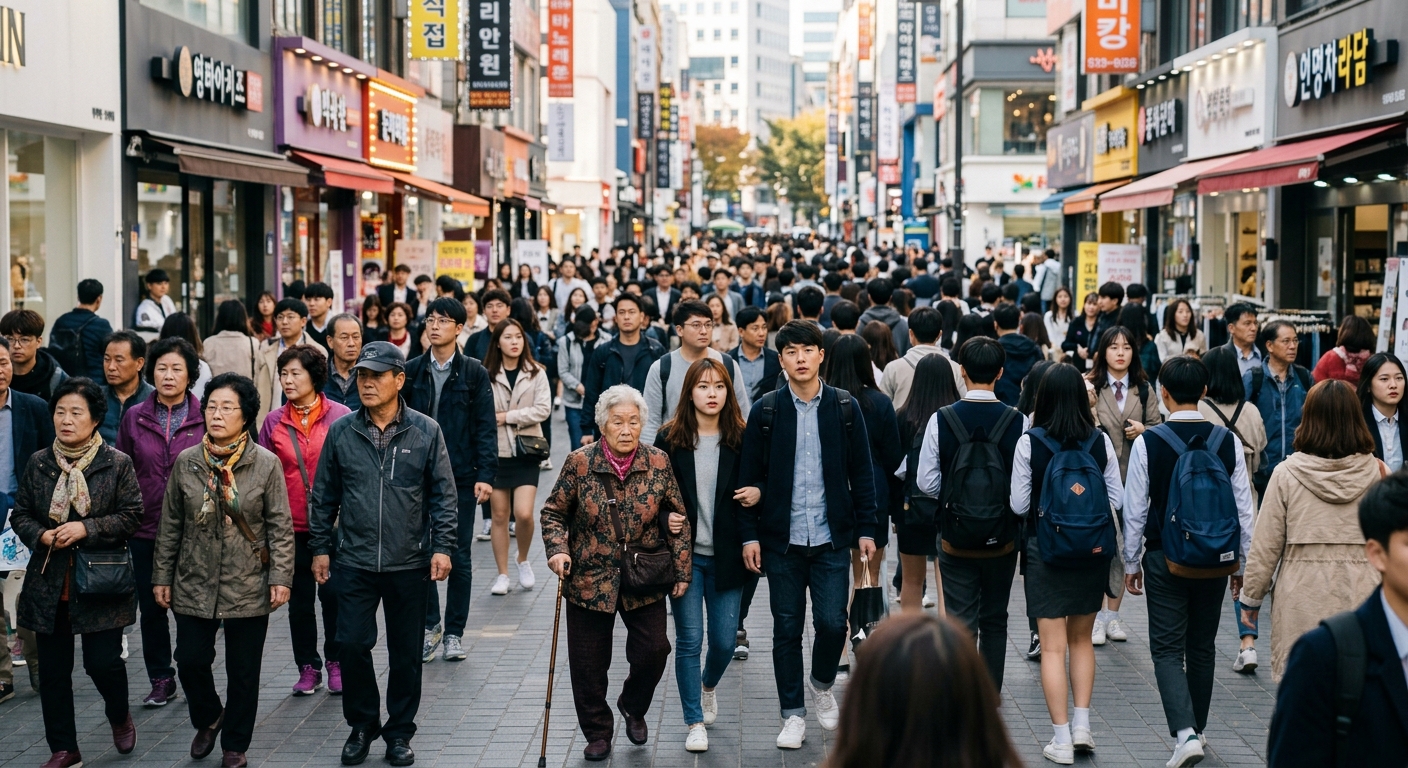
South Korea’s population story is no longer mainly about rapid growth. It is now about concentration, aging, and decline pressure happening at the same time.
For international readers, the easiest way to understand South Korea’s population is through a few core realities. The country still has a large population for its size, it remains one of the most densely populated developed countries in the world, the Seoul Capital Area dominates national life, and the birth rate has fallen so low that population decline is no longer a theoretical future problem. It is already part of the structure.
The basic scale: around 51 million people in a small, dense country
South Korea’s total population is usually placed at a little over 51 million. That number alone matters less than what sits behind it. South Korea is not a giant country geographically, which is why its population density remains so striking by OECD standards.
The country has long combined a mid-sized national population with very high urban concentration. In plain terms, a lot of people live in a relatively small amount of highly developed space.
| Indicator | Approximate figure |
|---|---|
| Total population | About 51 million |
| Population density | Among the highest in the developed world |
| Urbanization | Very high, with the overwhelming majority living in urban areas |
| Core concentration zone | Seoul Capital Area |
This is why the Korean population issue is never just about how many people exist. It is also about where they live, how old they are, and how quickly the next generation is shrinking.
The Seoul Capital Area dominates the map
One of the most important numbers in any Korea population discussion is the share of people living in the Seoul Capital Area, including Seoul, Incheon, and Gyeonggi-do. Roughly half of the country’s population is tied to that wider metropolitan zone.
That concentration shapes almost everything: jobs, housing prices, private education, transport demand, and political attention. Korea’s demographic problem is not evenly distributed. Some places remain crowded and economically magnetic, while others face stagnation, aging, and out-migration much more sharply.
- Seoul Capital Area: the country’s main population and economic core
- Regional imbalance: young adults often move toward metropolitan areas
- Provincial pressure: smaller cities and rural areas face faster aging and depopulation risk
The birth rate is the most globally watched number
If one Korean population statistic gets the most international attention, it is the fertility rate. South Korea’s total fertility rate has fallen to extremely low levels by global standards, often cited as the lowest among major advanced economies.
That matters because replacement-level fertility is around 2.1 births per woman. South Korea has been far below that threshold for years. In other words, the issue is not a mild slowdown. It is a structural shortfall between generations.
This helps explain why the population issue appears in so many other debates. When births remain so low for long enough, the effects spread outward into school enrollment, university competition, military service planning, labor supply, pension burdens, elder care, and long-term economic growth.
Korea’s population challenge is not just that fewer babies are being born. It is that one very low number keeps colliding with nearly every major institution at once.
South Korea is getting older fast
Low birth rates would be a major issue on their own. Combined with rising life expectancy, they produce something even more transformative: rapid population aging.
South Korea’s share of elderly residents has been rising quickly, and the country is moving deeper into the category often described as a super-aging society. That changes the structure of the population pyramid. Instead of a broad younger base supporting a narrower older generation, the shape is becoming top-heavy.
For international readers, this is the key demographic shift:
| Population trend | What it means |
|---|---|
| Fewer births | Smaller younger cohorts entering school and later the labor market |
| Longer life expectancy | A growing elderly population needing pensions, healthcare, and care infrastructure |
| Aging workforce | Pressure on productivity, tax base, and labor replacement |
| Regional aging | Non-capital regions often age faster than Seoul metro areas |
Why the numbers matter beyond demography
Korea’s population structure connects directly to everyday policy and economic life.
Housing: Metropolitan concentration keeps pressure high in the capital region even while the national birth rate is collapsing.
Education: In some areas, fewer children mean shrinking school-age populations. In others, competition remains intense because families are clustered in high-demand districts.
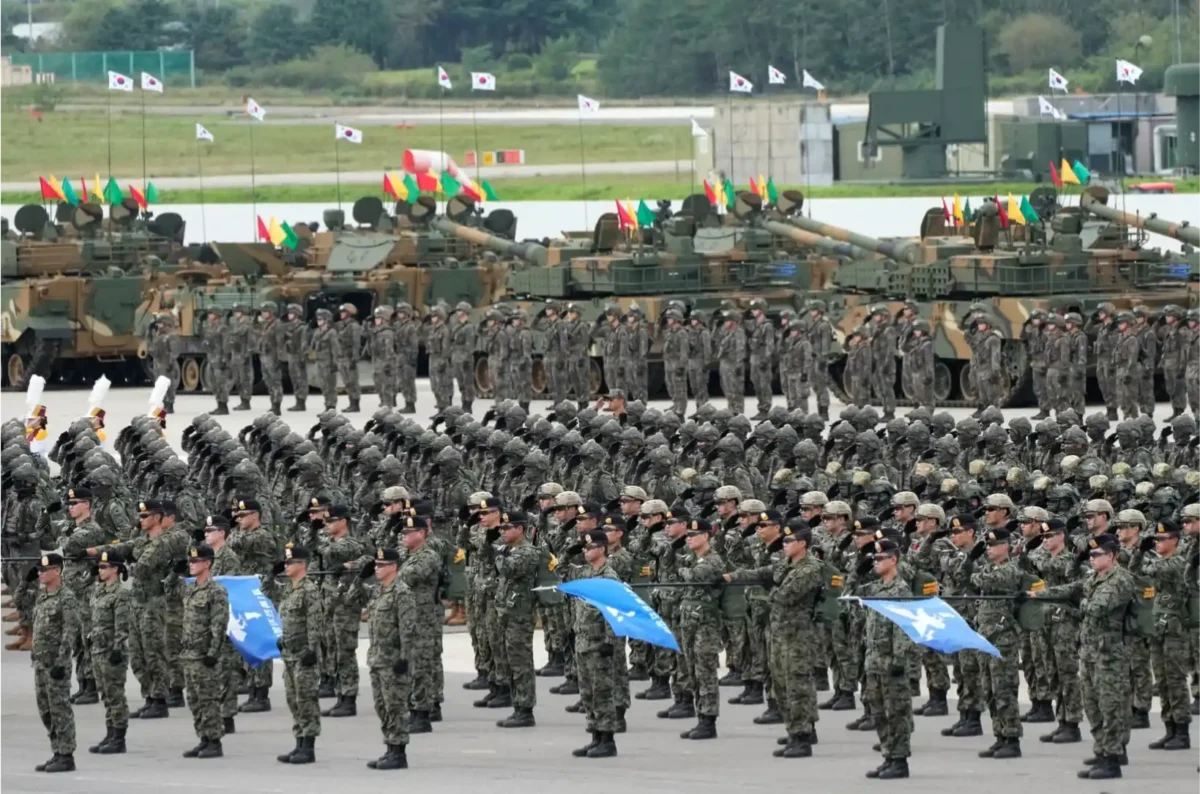
Military service: A smaller cohort of young men affects long-term force planning in a country that still faces serious security pressures.
Labor market: An aging society and shrinking youth cohort raise questions about productivity, migration policy, elder care, and workforce replacement.
Regional policy: Population decline is one reason Seoul-focused growth and regional decline have become such an important political issue.
What international readers should understand first
South Korea’s population story is often summarized too simply as “the country with the world’s lowest birth rate.” That is not wrong, but it is incomplete.
The fuller picture is this: South Korea has a still-large but aging population, extreme metropolitan concentration, a very low fertility rate, and growing regional imbalance. The national challenge is not one number. It is the interaction of all of them.
That is why the population issue keeps showing up in debates about real estate, schools, military manpower, labor shortages, pensions, and growth. Demography in Korea is not a side topic. It is infrastructure-level reality.
If you want to understand modern South Korea, population statistics are one of the best places to start. They reveal where people live, how the future workforce is shrinking, why aging is accelerating, and why the country keeps treating demographic change as one of its most serious long-term structural problems.
Image Credits: AI-generated image

Leave a Reply