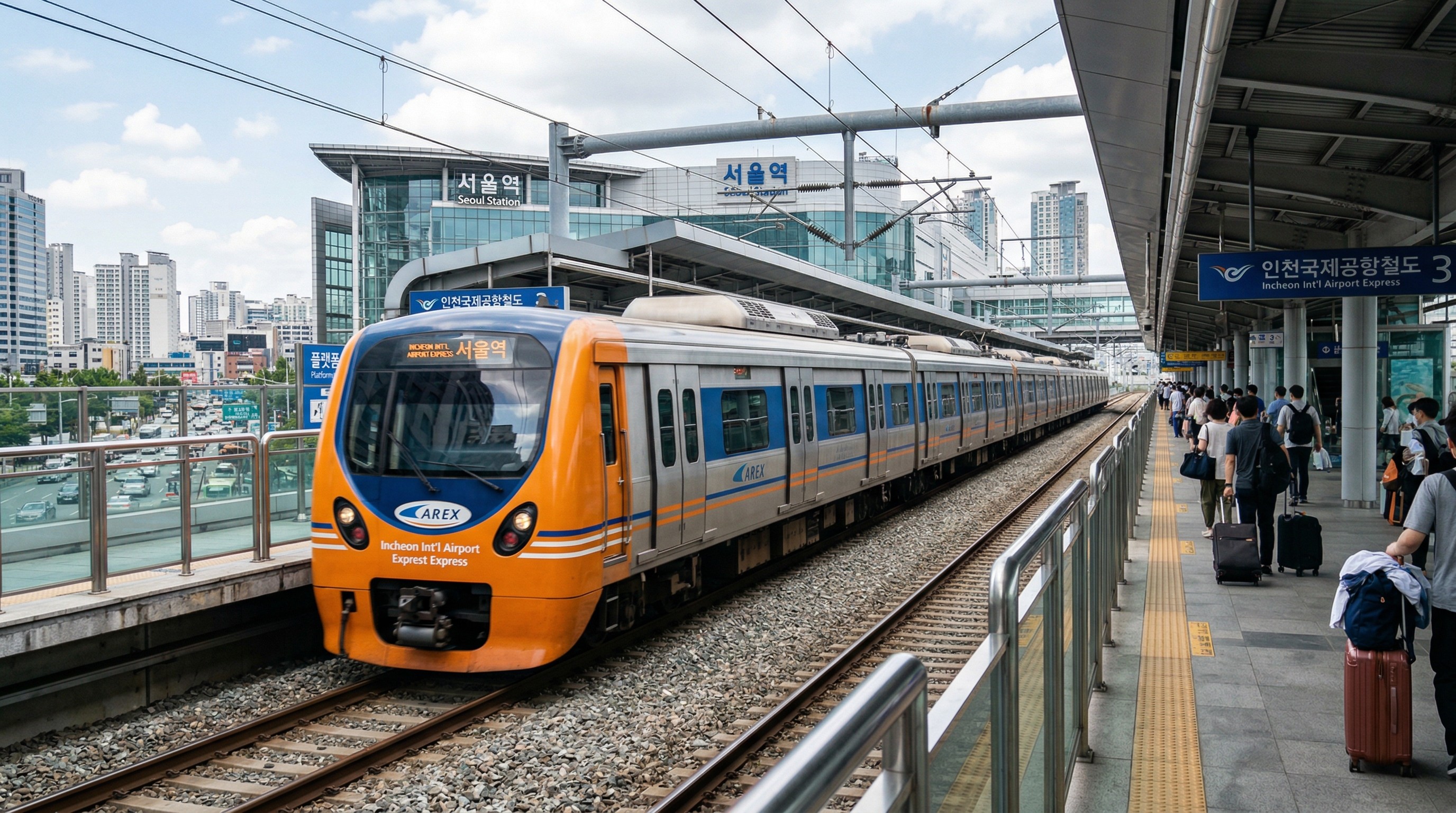
Transportation in South Korea is convenient because several systems work together: dense urban rail, strong intercity rail, frequent buses, simple transfers, and a payment system that removes a lot of friction from everyday travel. For most visitors and residents, the default assumption is that public transport will work.
Why getting around feels easy in practice
The broad reason is network density. The supplementary research describes South Korea as having extensive railways, highways, bus routes, ferry services, and air routes across the country. In daily life, that matters most in two ways: cities have strong local public transport, and the country has reliable intercity connections.
That creates a practical travel culture. In many countries, people ask first whether a place is reachable without a car. In South Korea, the usual assumption is yes. The real question is whether subway, bus, or train is the better option for that trip.
- Within cities: subway, local bus, and taxi are all normal options
- Between cities: conventional rail, KTX high-speed rail, express bus, and domestic air all exist
- For everyday use: transfers and stored-value transport cards make the system faster to use
Why the Seoul subway is the backbone of convenience
The Seoul subway is the clearest example of why transportation in South Korea feels easy. The supplementary material describes it as one of the best subway systems in the world for ease of use, cleanliness, and frequency of service. That reputation is not just civic pride. It comes from the way the system is built.
The network covers Seoul and extends deep into the wider capital region through urban rail and metropolitan rail. That matters because the capital region is not only Seoul proper. It also includes a much larger commuting zone, and rail links are what make that zone function as one daily travel system.
For riders, the convenience comes from several simple things happening together:
- Frequent service on major lines
- Clear station numbering and signage that help non-Korean speakers navigate
- Direct transfers between subway and bus systems
- Predictable travel times compared with driving in traffic
That last point is important. In Seoul, public transport often wins because it is more predictable than the road network.
Why KTX and the national rail system make the country feel smaller
South Korea is not a huge country geographically, and its rail system makes it feel smaller still. Intercity travel works because the country combines conventional rail with KTX, the high-speed train network. If the subway makes local life convenient, KTX makes national movement practical.
This changes how people think about distance. Trips between major cities that would feel like serious travel in some countries can feel routine in South Korea. The country’s rail culture is built around the assumption that trains are a normal way to move for work, family visits, business, and tourism.
Another practical advantage is punctuality. While no railway system is perfect, South Korea’s trains are generally perceived as relatively punctual, and serious delay is less normalized than in countries where long rail delays are common. That reliability matters as much as speed. A fast train is useful. A fast train you expect to run close to schedule is much better.
| Travel need | Most common strong option in South Korea |
|---|---|
| Short urban trip | Subway or local bus |
| Cross-city trip in Seoul metro area | Subway or metropolitan rail |
| Major intercity trip | KTX or conventional rail |
| Last-mile connection | Bus or taxi |

Why fares and transfers feel relatively painless
Convenience is not only about infrastructure. It is also about payment and pricing. South Korea’s transport system is easier to use because riders can move across much of the system with a stored-value transit card such as T-money. That reduces friction immediately. You do not have to think through separate ticketing every time you change modes.
The transfer system matters just as much. In daily urban travel, the ability to move from subway to bus, or bus to subway, without treating each leg as a separate full-price decision makes the system feel designed rather than patched together. That is one reason even complicated trips can feel manageable.
Cost is another advantage. Transportation in South Korea is often seen as relatively affordable for the level of service provided, especially in big cities where subway and bus trips can cover a lot of ground at modest cost compared with car ownership, parking, fuel, and tolls.
Where the system is less pleasant: traffic and rush hour
South Korea’s transport convenience has a clear limit, and it appears on the road. If you are traveling in Seoul or other major cities during commuting hours, road traffic can be slow and frustrating. This is the part visitors sometimes underestimate because the public transport system works so well.
The practical advice is simple:
- Avoid driving into central Seoul during peak commuting hours
- Assume taxis are affected by the same road congestion as private cars
- Use rail for time-sensitive trips when possible
- Expect major holiday periods to make intercity road travel much slower
This is not a contradiction. A country can have excellent public transport and still have bad urban traffic. South Korea has both.
What travelers and new residents should expect
If you are visiting or moving to South Korea, the practical expectation should be this: public transport will usually be the easiest default. In Seoul, Busan, and other major cities, local movement is usually straightforward by subway or bus. Between major cities, KTX and the national rail network make travel fast enough that you often do not need to think about domestic flights first.
The main adjustment is not complexity. It is peak-time crowding and road congestion. Once you learn the subway map, use a T-money card, and stop trying to judge travel by car logic, South Korea becomes one of the easier countries to navigate without much effort.
Image Credits: AI-generated image · AI-generated image

Leave a Reply