
Say “Korea University” to an international audience and you immediately get a problem. It sounds generic, almost like a placeholder name. In South Korea, though, Korea University means one very specific institution: Korea University, or Goryeo Daehakgyo, one of the country’s best-known universities and one-third of the elite trio called SKY.
That single detail opens up a much bigger story. Because once you start looking at Korea University, you are not just looking at one campus. You are looking at how prestige works in South Korea, how intense university competition can get, and why some campuses in Seoul are interesting even if you never set foot in a classroom.

Korea University is a real school, and a very important one
Let’s clear up the name first. Korea University is the English name of Goryeo University in Korean usage, written as Goryeo Daehakgyo. It is a major private research university in Seoul. Background information commonly identifies it as having begun in 1905 as Bosung College, which also helps explain why it carries such weight in Korean higher education history.
In Korean public life, university names do not function only as educational labels. They often operate as status markers, social shorthand, and career signals. That is especially true for a handful of top institutions. Korea University belongs firmly in that group.
And yes, the reputation is real. This is not one of those schools that sounds prestigious only because outsiders have heard the name before.
What SKY means, and why Koreans care so much
If you want to understand the upper tier of Korean university culture, start with the acronym SKY. It stands for:
- Seoul National University
- Korea University
- Yonsei University
These three schools sit at the center of the country’s prestige map. Not the whole map, obviously. South Korea has many strong universities. But SKY has a symbolic force that goes far beyond normal school rankings.
Why? Because in Korea, university admission has long been tied to status anxiety, family expectations, job access, and the general national obsession with educational sorting. On paper, it is about getting into a good school. In practice, it can feel like a referendum on years of effort, money, tutoring, and self-discipline.
SKY is not just an acronym. It is a social weather system.
That sounds dramatic. It is also more or less true. Even people who dislike the prestige culture still have to live inside it.
Where the major universities are
One useful thing about Seoul is that its university geography tells you a lot about the city itself.
Korea University is in the northeastern part of Seoul, in the Anam area. It feels like a serious university zone: student-heavy, practical, not especially built for tourists, but very much alive with campus energy.
Seoul National University, often treated as the most prestigious national university in the country, is in Gwanak, in southern Seoul. Its campus is famously large and has more of a broad, self-contained feel than many urban universities.
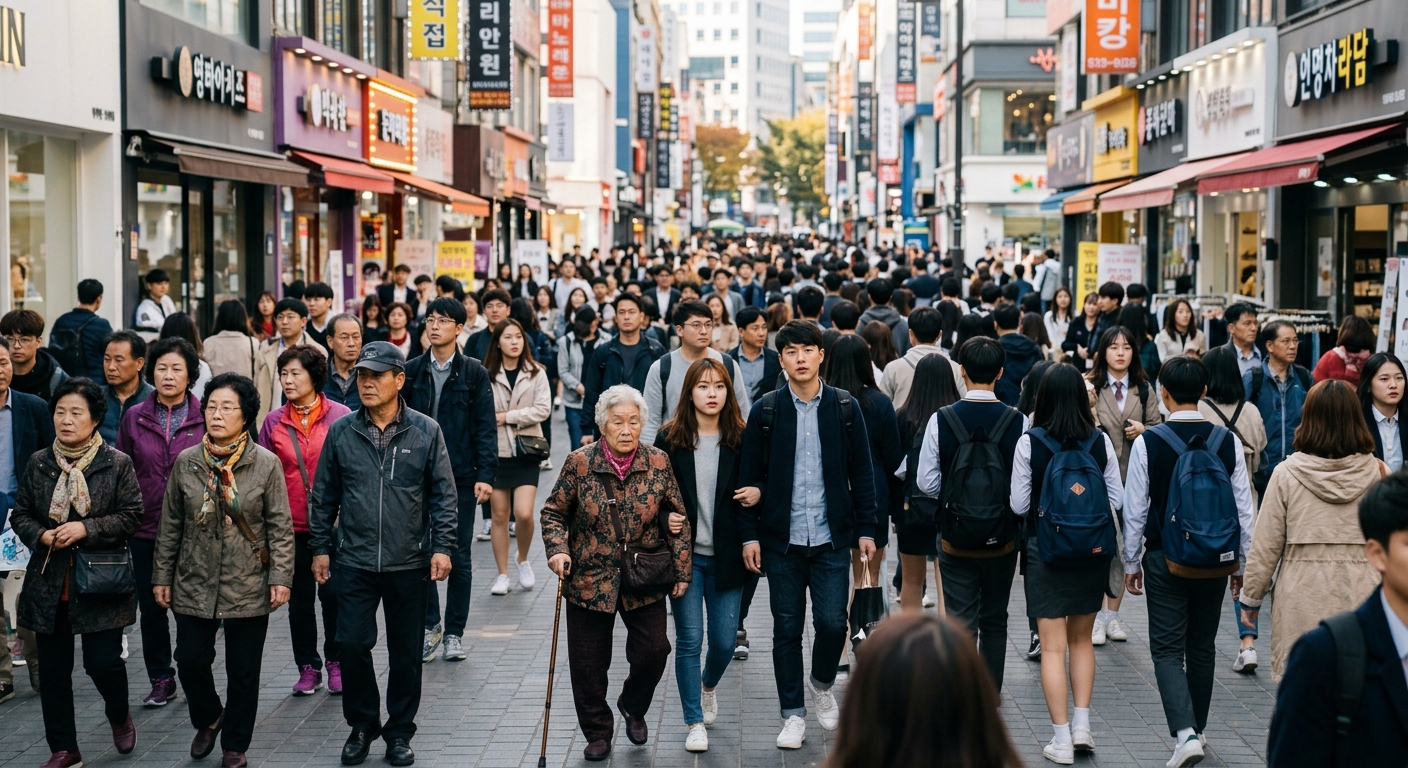
Yonsei University is in Sinchon, one of the best-known student districts in Seoul. This is where the university-city blend becomes especially visible: campus buildings, busy youth streets, chain stores, independent cafés, and endless food options all tangled together.
Hongik University, usually shortened to Hongdae when people talk about the area, is in western Seoul. Technically, Hongdae refers both to the university and to the much larger neighborhood culture built around it. The school has a strong arts and design identity, and the surrounding district is one of Seoul’s most famous youth zones.
How competitive Korean universities really are
The short version? Very.
South Korea is known for extreme competition in university admissions, and the upper tier is where that pressure becomes most visible. Exact acceptance patterns vary by department, exam year, and admissions track, so it is smarter to avoid fake precision here. But the broad picture is clear: top Korean universities are difficult to enter, and the most prestigious ones are wrapped in a national culture that treats admission as a major life event.
That culture is tied to the Suneung, or CSAT—the national college entrance exam. If you have heard stories about airplanes being grounded from certain noise disruptions and families treating exam day like a military operation, that is the same universe.
Is the pressure excessive? Yes. Often absurdly so. But if you want to understand why university names matter so much in Korea, you have to start there.

Which campuses are actually worth visiting?
Not every famous university is automatically fun to visit. Some are important academically and dull as physical spaces. Others are worth going to even if you have zero interest in rankings.
Yonsei University is one of the best campuses to visit in Seoul. The grounds are spacious, attractive, and easy to combine with a wider walk through the surrounding neighborhood. If you like campus architecture, tree-lined paths, and the feeling of a university embedded inside a busy youth district, Yonsei delivers.
Seoul National University is also notable for scale. It has the kind of broad campus footprint that feels almost suburban by Seoul standards. If you want to see a major flagship campus that feels expansive, this is a strong option.
Korea University is worth seeing if you are specifically interested in major Korean universities, but it is less of a casual sightseeing campus than Yonsei for most visitors. The appeal is more institutional and cultural than leisurely.
Hongik University is the opposite case. The campus itself is not always the main attraction. The surrounding Hongdae area is.

Yonsei, Sinchon, and the food problem you will be happy to have
If your plan is to combine campus walking with actual enjoyment, Yonsei and Sinchon are hard to beat.
Sinchon is one of Seoul’s classic university districts, shaped by student traffic, affordable eateries, cafés, bars, chain restaurants, and side streets full of quick meal options. It is not polished in the luxury-neighborhood sense. That is exactly why it works. You go for energy, convenience, and the sense that there is always somewhere to sit down and eat.
And there will be. Korean university neighborhoods are built around student appetite and budget pressure. That means:
- Cheap meals are easy to find
- Cafés are everywhere
- Casual food streets tend to be more useful than curated
- The atmosphere is better when you wander than when you over-plan
Sinchon especially rewards that style of visit. Walk Yonsei’s campus, drift out toward the neighborhood, and eat wherever looks busy enough to trust.
Hongik University is less about the school than the ecosystem
Hongik University deserves mention because international visitors hear “Hongdae” constantly, sometimes without realizing it started as a university district. The school itself matters, particularly for its arts reputation, but the neighborhood long ago grew into something bigger: youth culture, nightlife, busking, fashion, cafés, design shops, and the performance of being young in Seoul.
If Korea University represents elite academic branding and Yonsei represents the pleasant campus walk, Hongik University represents what happens when a university area escapes the university and turns into a full urban identity.
That is why it is useful to place these schools side by side. They are not interchangeable. They tell different stories about Seoul.
How to read Korean university culture as a visitor
The mistake many visitors make is treating campuses only as sightseeing spots. In Seoul, campuses are also clues. They show you how education, class ambition, neighborhood life, and youth culture intersect.
Korea University helps explain prestige. Seoul National University helps explain scale and hierarchy. Yonsei helps explain why campus districts can be lovely to wander. Hongik University helps explain how student neighborhoods can outgrow the institution that gave birth to them.
So if you are interested in Korea, universities are absolutely worth your time—not only as schools, but as urban cultural spaces. The funny part is that the most revealing thing may not be inside the lecture hall at all. It may be the walk between the campus gate, the coffee shop, the cheap lunch spot, and the crowded street where everyone seems to be deciding what kind of future they want.
Image Credits: User-provided Seoul National University and Sinchon images · Additional campus image: Photo by Andrea De Santis on Pexels


Leave a Reply