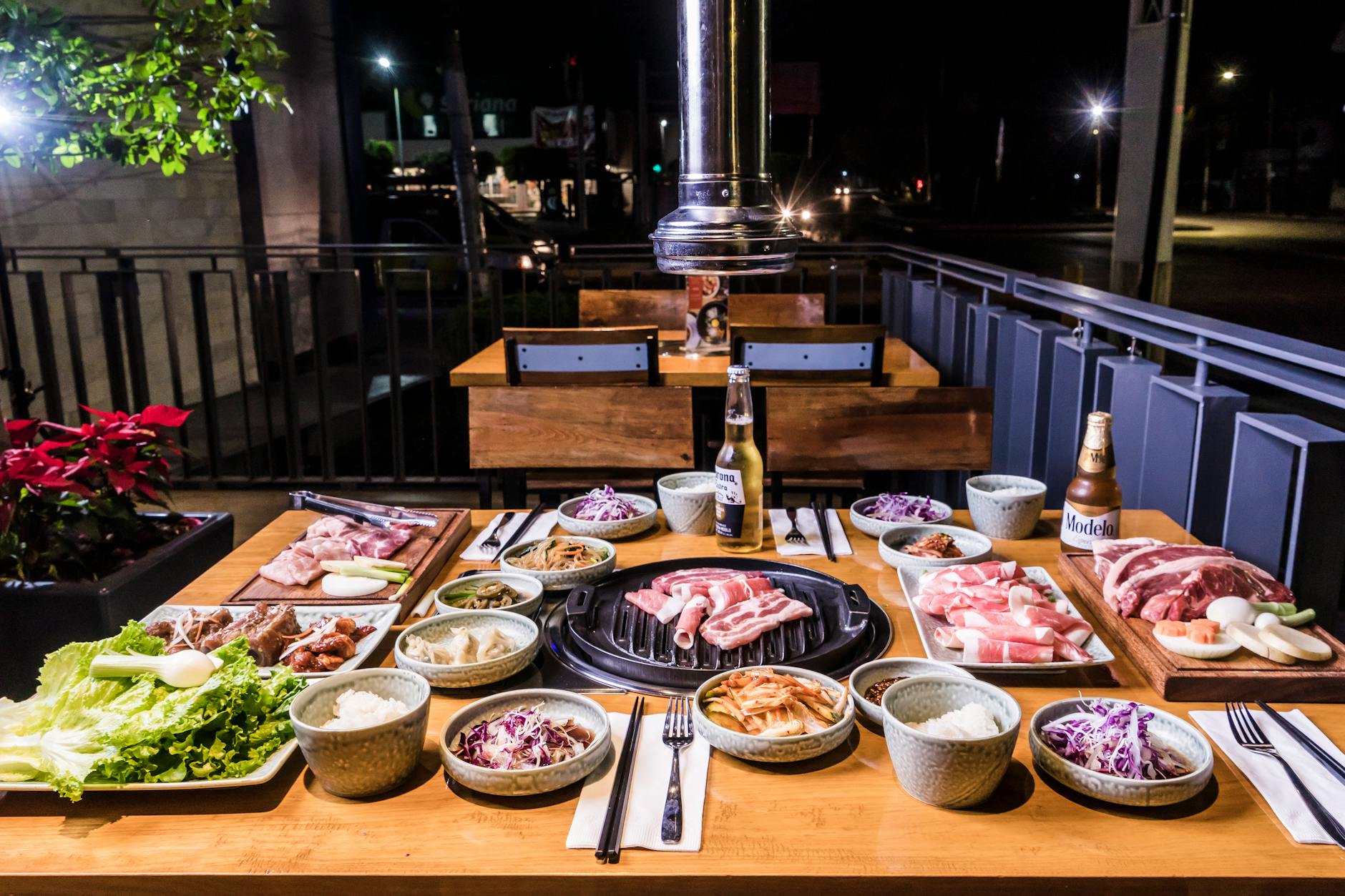
You used to eat with your mouth first. Now, in a lot of Korean food culture, you eat with your eyes, your ears, and your phone.
That shift helps explain why texture has become such a big deal in South Korea. Crunchiness. Stretchiness. Creaminess. Chewiness. The little crack of a sugar shell, the wobble of a pudding-like dessert, the slow tear of soft bread, the exaggerated pull of melted filling. These are not side details anymore. They are often the whole point.
And honestly, it makes perfect sense. Taste is hard to transmit through a screen. Texture is not. You can see it instantly. Sometimes you can almost hear it. In a short-form video culture, that matters more than people admit.
Texture works online in a way taste never can
South Korea’s food scene moves fast, and social media has made it even faster. One reason texture now matters so much is brutally simple: it translates well on screen.
That idea is supported clearly by recent reporting. In a digital ecosystem shaped by short-form video, texture has become more useful than taste as a shareable food language. Taste is private. Texture is visible. A crisp coating breaking apart, a cream filling spilling out, a chewy center stretching under pressure—those things can be understood in seconds by someone scrolling half-awake on the subway.
Texture is the part of food that social media can actually film.
That is why certain foods suddenly explode online. Not always because they taste revolutionary. Sometimes because they look satisfying in a way the algorithm can understand.
Crunch, chew, and cream are now part of the sales pitch
You can see this shift in the kinds of words and sensations that now dominate food marketing and food talk. Younger consumers in Korea are not judging food only by flavor. They are also paying attention to how it breaks, stretches, melts, bounces, or coats the mouth.
The textures getting the most attention are usually these:
- Crunchiness — crisp coatings, brittle toppings, layered pastries, crackly shells
- Chewiness — mochi-like bites, dense breads, springy desserts, elastic fillings
- Creaminess — thick creams, soft fillings, smooth puddings, rich drinks
- Visual softness — fluffy breads, cloud-like cakes, thick whipped textures
- Contrast — crunchy outside and creamy inside, airy top and dense center
This is not random. Broader food industry reporting also points to brands deliberately building products around more engaging sensory experiences, especially textures like crunchiness, creaminess, and chewiness. Korea is not isolated from that trend. It is one of the places where it becomes especially visible, because the café and convenience-food ecosystems are already built for rapid experimentation.
Younger Korean consumers are not just eating. They are collecting experiences.
The younger end of the market—especially people used to fast, visual, app-driven consumption—often wants food to do more than taste good. It should feel fun, look good in a photo or clip, and offer a tiny moment of satisfaction that is easy to share.
That is where texture becomes powerful. A chewy dessert or crackling pastry creates anticipation before the first bite. It adds drama. It gives people something specific to comment on. Not “it was nice,” but “the outside shattered,” or “the cream was absurdly thick,” or “the center had that stretchy bite everyone is chasing right now.”
That kind of reaction is social gold. Specific. Performable. Repeatable.
And yes, some of it is a little ridiculous. A dessert should not need a viral mouthfeel strategy to survive. But here we are.
Cafés and bakeries are built for this trend
If you want to see texture trends in Korea in real time, cafés and bakeries are the obvious places to start.
These businesses are already set up for short product cycles, seasonal menu items, and visually attractive displays. That makes them ideal laboratories for texture-driven food. One month it is a thick cream-filled pastry with a dramatic cross-section. Next month it is a denser, chewier bread with a more satisfying tear. Then a layered dessert with multiple textures in one spoonful.
The point is not just invention. It is speed.
Korean café culture is highly responsive to online attention. If a certain texture starts appearing in short videos and review posts, similar products can spread quickly across neighborhoods and chains. Independent bakeries, dessert cafés, and brand collaborations all feed that cycle.
You would expect flavor innovation to lead. Increasingly, texture is the shortcut.

Desserts have an unfair advantage in the texture economy
Not all foods benefit equally from this trend. Desserts have a huge edge.
Why? Because dessert already lives in the territory of indulgence, novelty, and visual excess. It can be soft, thick, glossy, layered, overfilled, jiggly, frozen, whipped, brûléed, dusted, torched, or stretched without anyone asking whether this is a sensible lunch.
That freedom matters. It allows Korean dessert culture to turn texture into a headline feature rather than a supporting detail. A pastry does not just have cream; it has a cream texture worth filming. A pudding does not just wobble; it wobbles in a way designed to trigger immediate attention. A bread is not simply chewy; it is satisfyingly chewy, a product category and a mood board at the same time.
Convenience foods are moving faster because they have to
The more interesting shift may be happening outside cafés. Texture is also shaping convenience foods, and that tells you this is not just an aesthetic niche.
In Korea, convenience stores are not an afterthought. They are major testing grounds for everyday food behavior. If texture starts becoming a selling point there—through crisp snacks, cream-heavy desserts, chewy rice cakes, layered sandwiches, premium-feeling packaged sweets, or limited-edition bakery items—then the trend has moved from visual curiosity to mass retail logic.
That is when things get serious.
Once convenience retail joins in, the cycle speeds up again:
- Trends appear online
- Cafés and bakeries adapt quickly
- Convenience stores translate the idea into packaged form
- Consumers normalize the texture expectation
At that point, even ordinary snacks start needing a more interesting mouthfeel.
The real trend is not texture alone. It is texture plus velocity.
Here is the part people miss. The story is not simply that Koreans suddenly care about crunch or chew. People have always cared about texture. The real change is that texture can now travel at internet speed.
That is why trend cycles feel shorter. A visually satisfying food item can be filmed, clipped, reposted, imitated, reviewed, and repackaged almost immediately. Korea’s dense urban food culture makes that process even faster. A trend does not need years to settle into the market. Sometimes it barely needs a season.
And that creates pressure. Cafés, bakeries, dessert brands, and convenience stores all need something that feels new but also legible within seconds. Texture does that job beautifully.
What this says about food culture in South Korea now
Texture’s rise says something bigger about how food is changing in Korea. Food is still about taste, obviously. Nobody is willingly lining up for something bad just because it cracks well on camera. But taste alone is no longer enough to explain why a product catches on.
Food now has to perform across multiple layers:
- It should taste good
- It should feel satisfying in the mouth
- It should look good on screen
- It should be easy to describe, film, and share
That combination is why texture matters now more than before. It sits at the intersection of sensory pleasure and social media logic. Korea just happens to be one of the clearest places to watch that intersection at work.
And the obvious next question is whether this ends with food. Probably not. Once consumers get used to buying experiences that are as visual and tactile as they are flavorful, the standard rises everywhere. Taste still matters. But in South Korea right now, texture is often what gets the first click—and increasingly, the sale.
Image Credits: Photo by Luis Becerra Fotógrafo on Pexels · Photo by Thành Văn Đình on Pexels



Leave a Reply