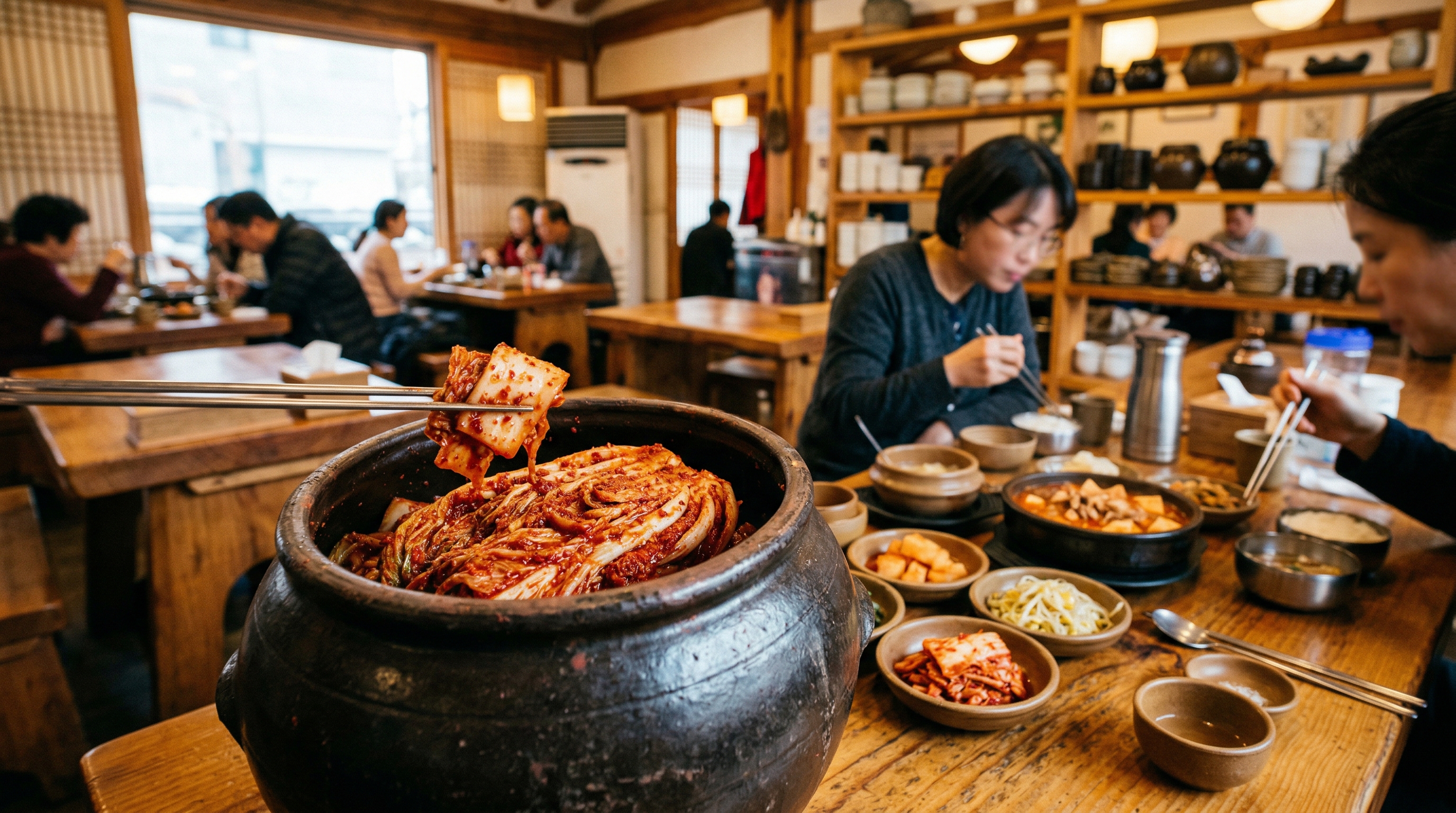
Kimchi is one of the easiest Korean foods to recognize and one of the hardest to explain properly. To many outsiders, it looks like spicy fermented cabbage. That description is not wrong, but it is too small. In Korea, kimchi is food, storage technology, seasonal labor, family cooperation, and a cultural habit of making enough not only for yourself, but often for others too.
That is why kimchi matters. It is not simply eaten. It is prepared, aged, stored, argued over, and shared.
Kimchi began as preserved vegetables, not as a symbol of heat
The origins of kimchi go back to the basic need to preserve vegetables. Before modern refrigeration, salting and fermenting vegetables was a practical way to make food last through colder months and leaner seasons. In that sense, kimchi began less as a national icon and more as a solution.
Over time, the Korean practice of seasoning preserved vegetables became more elaborate. Different regions, ingredients, and techniques shaped different kimchi traditions. The kimchi many global eaters now imagine — red, spicy, bold, and deeply seasoned — is not the only form that existed historically. Older kimchi traditions included versions that were lighter in color and less defined by chili heat.
Kimchi did not begin as “spicy Korean food.” It began as a preservation system that gradually became a cultural signature.
Why modern kimchi feels inseparable from spice
Today, when most people picture kimchi, they picture red pepper color and sharp fermented heat. That modern image became stronger as chili-based seasoning became central to many popular kimchi styles. In everyday Korean life, that spicy identity now feels almost inseparable from kimchi, even though kimchi history itself is older and broader than chili alone.
This matters because the flavor profile is part of kimchi’s emotional power. Kimchi is not only sour or fermented. It is often spicy, garlicky, savory, and alive with texture. That intensity is one reason it works so well with rice, grilled meat, stews, noodles, and many ordinary meals. It cuts through richness and wakes up a plate.
That is also why people who dislike kimchi at first sometimes change their minds later. It often makes more sense once it is eaten in context rather than treated like an isolated novelty.
From earthenware jars to kimchi refrigerators
One of the most interesting parts of kimchi culture is storage. Historically, kimchi was often kept in earthenware jars, including the large outdoor jars that many people now associate with traditional Korean households. These jars helped regulate temperature and fermentation more steadily than many outsiders expect, especially when placed in cool conditions or partially buried.
In modern Korea, the old storage logic did not disappear. It evolved. Instead of relying on outdoor jars alone, many households came to use kimchi refrigerators, appliances designed to maintain temperature and humidity conditions better suited to kimchi storage than an ordinary refrigerator.
This is one of those Korean details that seems funny until you understand how much kimchi people actually store and eat. Then it stops looking excessive and starts looking practical.
A kimchi refrigerator is not just a luxury gadget. It is a modern answer to the same old question: how do you keep kimchi tasting right over time?

Kimjang is where kimchi becomes family culture
If kimchi is the food, kimjang is the social institution around it. Kimjang refers to the seasonal practice of preparing large amounts of kimchi, traditionally for the winter. This is not only about cooking. It is about timing, labor, cooperation, and scale.
UNESCO recognized Kimjang, making and sharing kimchi in the Republic of Korea as Intangible Cultural Heritage because the practice carries more than culinary value. It brings families and communities together. People prepare kimchi in large amounts, help one another, and often share some of what they make with relatives, neighbors, or people in need.
That is one reason kimchi in Korea is tied so strongly to ideas of family and care. It is not just something purchased and forgotten. In the kimjang tradition, food preparation becomes social glue.
- Family members work together
- Recipes and habits are passed down
- Large batches reflect winter preparation
- Sharing reinforces neighborhood ties
In a modern apartment society, kimjang may not always look exactly as it once did, but the cultural logic is still recognizable.
Why kimchi is so often discussed as healthy
Kimchi is frequently described as a healthy food, and there is a reason that reputation stuck. It is a fermented food, often associated with beneficial bacteria, fiber-rich vegetables, and strong flavor without needing heavy richness. That said, it is best not to treat kimchi as a miracle substance. It is food, not medicine.
Still, the health reputation makes sense. Fermentation, vegetables, and relatively small serving sizes in everyday meals all help explain why kimchi is often presented as both traditional and nutritionally interesting. It is one of the rare foods that can be discussed as culture, habit, and health at the same time.
Why kimchi means more than taste
Kimchi matters in Korea because it links old and new so naturally. The logic of preserving vegetables for winter survives in modern refrigeration. The old earthenware jar survives in the design philosophy of the kimchi refrigerator. A family labor ritual survives in kimjang gatherings. A side dish becomes an identity marker.
And then there is the sharing. Kimchi is personal — every household has preferences — but it is also communal. The culture around it still carries the idea that food is something you prepare in enough quantity to connect people, not only to feed yourself.
That is why kimchi in Korea is not just spicy cabbage. It is preservation, fermentation, memory, family effort, winter planning, and the habit of giving some away. The next question is not why Koreans care so much about kimchi. It is why so many outsiders still think the story ends at the first bite.
Image Credits: AI-generated editorial image · AI-generated editorial image



Leave a Reply