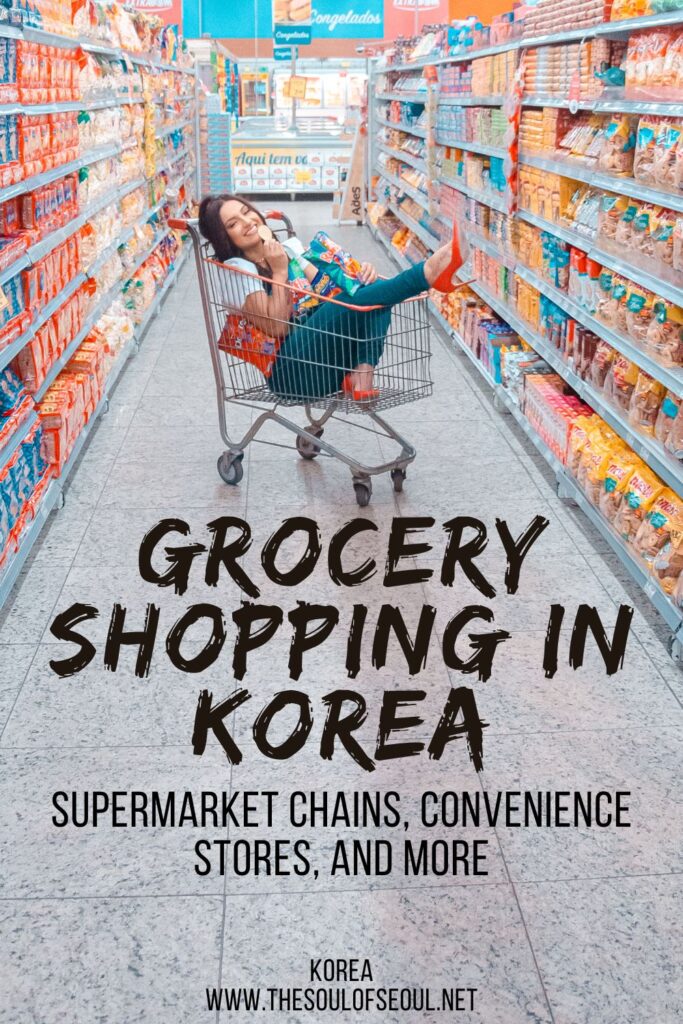
The old Korean hypermarket trip used to come with its own little mythology. You drove there, loaded a cart, bought everything in one place, maybe grabbed lunch, and told yourself this was efficient adulthood.
Now it increasingly looks like a hobby.
That is the problem for South Korea’s large supermarkets. They are not just under pressure. They are losing the basic argument for why people should keep going. Once groceries, household goods, and random late-night necessities can appear at your door before morning, the whole point of the big-box trip starts to wobble.
And in Korea, it has been wobbling hard.
The decline is not just about weak sales. It is about a broken habit.
Large supermarkets once had a clear advantage: scale, broad assortment, and the feeling that one trip could solve a week’s worth of domestic logistics. That model still works on paper. In real life, many Korean shoppers no longer organize their week that way.
Shopping habits have changed faster than the stores did. People now expect goods to come to them, not the other way around. That is especially true in dense urban areas where carrying bags, planning big trips, or spending extra time on errands increasingly feels irrational rather than efficient.
The biggest problem for Korean hypermarkets is not that they became bad. It is that they became interruptive.
That is a much worse problem, because once a retail format starts feeling like friction, not convenience, recovery becomes difficult.
Coupang did not just grow. It rewired expectations.
If one company represents the retail shift most clearly, it is Coupang.
Coupang’s rise mattered not only because it became big, but because it changed what people think normal service should look like. Fast delivery became ordinary. Late-night ordering became ordinary. The line between “I need this soon” and “I’ll just order it now” became much thinner.
That is what makes the company so disruptive. It did not merely compete with hypermarkets on product selection or price. It attacked the time logic behind physical shopping.
Once that happened, big supermarkets were no longer being judged against each other. They were being judged against the idea that shopping could be nearly invisible.
Dawn delivery was the real killer move
The most damaging retail innovation was not simply e-commerce. It was dawn delivery.
That model is brutally effective in South Korea. Order late at night, receive the goods early the next morning, and remove an entire errand from your life. In a country with high delivery expectations, apartment-heavy urban living, and long work hours, that convenience is almost unfair.
You would think people would still go to the supermarket for “real” grocery shopping. Some still do. But dawn delivery changed the emotional comparison. Suddenly a physical trip did not feel like responsible planning. It felt like unnecessary effort.
- Need groceries after work? Order them.
- Need household items quickly? Order them.
- Need fresh food by morning? Order it.
Once this becomes routine, the supermarket loses one of its last natural defenses.

Homeplus became the most visible casualty
If you want a symbol of the sector’s decline, look at Homeplus.
Recent reporting around Homeplus has made the broader point impossible to ignore: the shift of consumer behavior from offline to online, combined with the explosive growth of large e-commerce players like Coupang, has visibly weakened the position of traditional retail channels. Homeplus did not become the center of attention because it was the only company in trouble. It became the center because it made the structural problem visible.
Store closures matter because they tell the public something straightforward: this format no longer earns its footprint the way it used to. Big stores need traffic, basket size, and repeat visits to justify their costs. Once those habits begin to thin out, closure is not a surprise. It is the logic of the model catching up with itself.
And when a chain like Homeplus starts shrinking or entering serious distress, people do not read it as isolated bad luck. They read it as proof that the old order is cracking.
Offline retail cannot win if it loses both convenience and urgency
For a physical hypermarket to stay strong, it usually needs one of three advantages:
- Better prices
- Better immediacy
- A stronger overall shopping experience
The problem in Korea is that online platforms have attacked all three. They narrowed the price gap through scale and promotions. They weakened the urgency advantage through dawn and rapid delivery. And they made the “experience” question harder by turning shopping itself into something many consumers now prefer to avoid.
That is why the decline feels structural rather than cyclical. A bad economy can hurt retail temporarily. A better logistics model can permanently demote it.
This is not just a Homeplus story
It would be comforting to think the issue belongs mainly to one troubled chain. It does not. The pressure extends across the big-box supermarket sector.
Even chains that remain larger or operationally stronger are working inside the same environment: online-first consumers, shrinking tolerance for inefficiency, and a retail culture that increasingly values speed over ritual. A large supermarket can still attract shoppers, of course. But it no longer feels like the unquestioned center of household purchasing.
That shift matters because retail power is rarely lost in one dramatic moment. Usually it fades by habit. Fewer visits. Smaller baskets. Less loyalty. More “I’ll just order it.” Then one day the format is still physically there but psychologically downgraded.
Korean retail now favors systems that work while you sleep
The broader point is not only that big supermarkets are weaker. It is that South Korean life is now organized around a different retail rhythm.
The winning model is increasingly:
- App-based
- Logistics-heavy
- Time-saving
- Nearly invisible to the consumer
That is why Coupang matters so much. It fits how modern Korean urban life actually works. Hypermarkets, by contrast, fit an older pattern: planned trips, large baskets, dedicated shopping time, car-based convenience, and stronger tolerance for errands. That world has not disappeared entirely. It is just no longer setting the pace.
And that is why the decline of Korean big supermarkets matters beyond retail gossip. It tells you something about the country itself. South Korea is choosing systems that erase friction, compress time, and push ordinary consumption into the background. The question now is not whether the old hypermarket model can survive exactly as it was. It is whether chains built for a previous version of convenience can become useful again in a country that has already moved on.
Image Credits: Image from thesoulofseoul.net (editorial use) · Image from gettyimages.com (editorial use)


Leave a Reply